A thank-you bouquet does not need a secret floral code. Three details are usually enough to make a considered choice: what you are thanking someone for, how close you are, and what they genuinely like. If you know their favourite colour or style, start there.
If you do not, choose the intended effect first: friendly and light, calm and elegant, or deliberately colourful. Size and flowers come next. This allows the bouquet to suit the gesture without asking one particular variety to carry the whole message.
Let the relationship set the tone
Not every thank you needs the same volume. For a neighbour who took in a parcel or a colleague who stepped in at short notice, a smaller, bright bouquet may be exactly right. It shows thought without turning an everyday favour into a formal ceremony.
If someone supported you over several weeks or stood by you through a difficult situation, the gesture can feel fuller and more personal. There is no fixed size rule; what matters is the relationship between the reason and the person. A bouquet should show appreciation, not overwhelm its recipient with implied significance.
Favourite colour beats flower language
Flowers and colours have accumulated many traditional meanings, but those associations are neither consistent nor universal. Warm yellow can look friendly and lively, muted pink soft, and cream calm and clear. These are visual impressions, not binding translations.
If you know that the person loves vivid purple or simply dislikes yellow, that information is worth more than any symbolism chart. Only very familiar associations need a little extra thought: a bouquet of red roses may be read as more romantic than a neutral thank you was meant to be. You still do not need a floristry oracle.
How large should a thank-you bouquet be?
It is more useful to choose size by visual effect than by a fixed stem count. A compact bouquet feels like an easy, thoughtful gesture. A medium, loosely shaped design has more presence while remaining light. A full, generous bouquet makes a clearer statement and better suits a thank you with real weight behind it.
Consider the handover as well. If the recipient will need to carry the bouquet for some time, has little space at work, or will receive it as a surprise, a manageable shape may be more comfortable. Generosity is not measured in centimetres alone.
Describe a mood instead of fixing a flower list
A fixed flower list is only one way to describe a bouquet. For a thank-you bouquet, it is often more useful to name the colour, style and intended effect. This keeps the design idea clear without asking one particular variety to play the leading role.
Rather than specifying five varieties, you might ask for “warm, friendly and not romantic”, “soft, natural and understated”, or “colourful without feeling busy”. This gives the florist room to shape the design while keeping its direction clear.
Three easy colour directions
Warm and friendly
Yellow, apricot, peach and a little orange create a bright, approachable direction. Green brings calm between the warmer tones. This palette works well when the thank you should feel heartfelt and relaxed.
Soft and personal
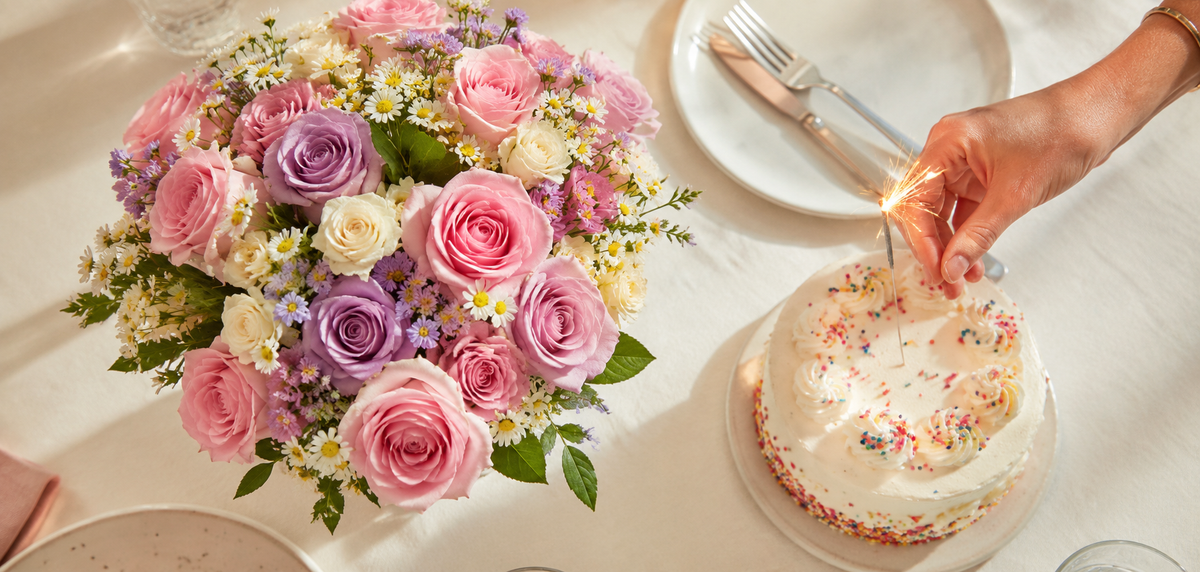
Blush, muted pink, apricot and cream can be brought together as a gentle colour family. Different levels of light and depth keep the mixture alive without creating a sharp contrast. The result can feel approachable and carefully chosen.
Calm and clear
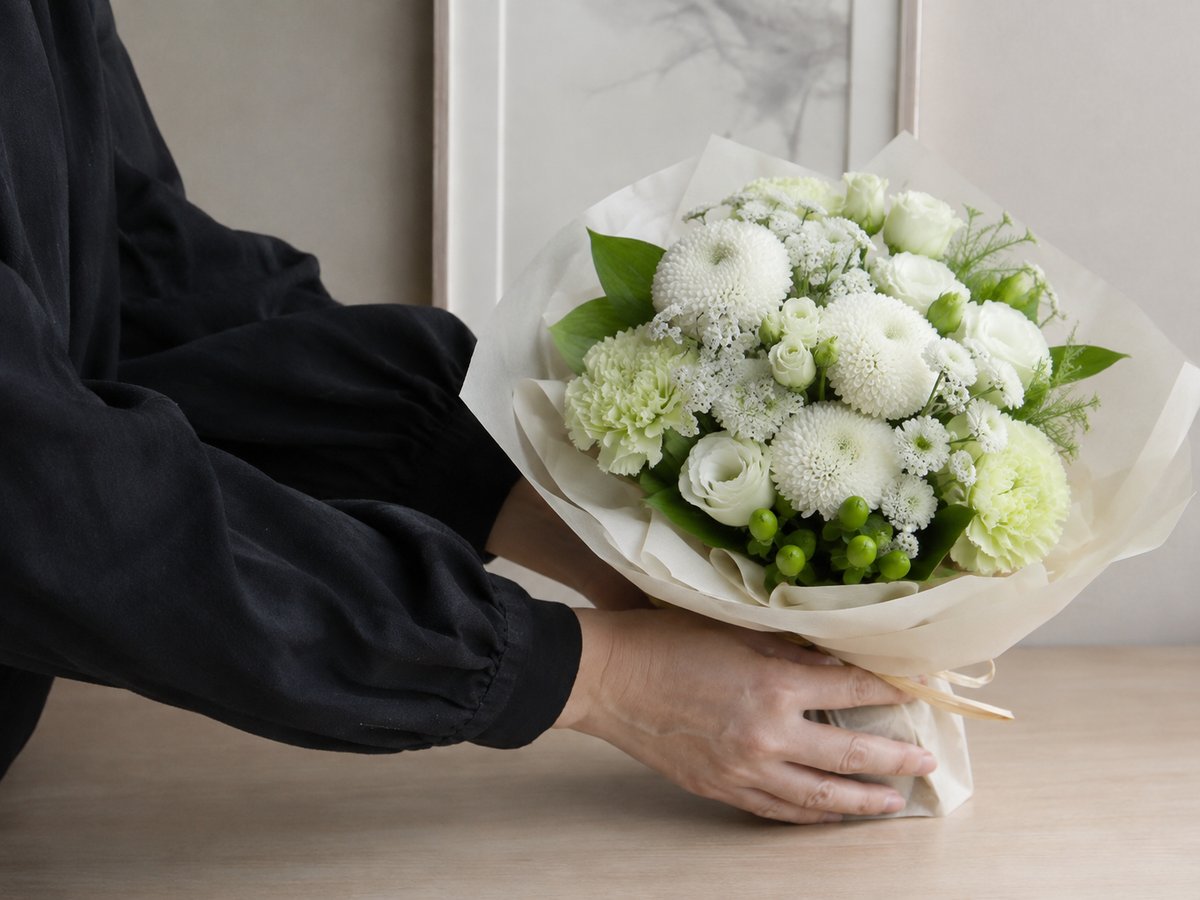
Cream, white and several greens feel pared back. A single accent in yellow, violet or a berry tone keeps the palette from becoming too formal. This direction suits a gesture that should be quiet without feeling cool.
The card makes the thank you specific
The bouquet creates the moment; the card explains what it means. One honest sentence with two parts is often enough: “Thank you for …” and “It meant … to me.” The more specific the reason, the less ceremonious the wording needs to be.
This article deliberately stays with choosing the bouquet. The card does not need a collection of grand quotations, just one genuine reference: the task someone took on, the listening ear, the invitation, or the help that arrived at the right moment.
Five questions before you choose
- What are you thanking them for? A small favour, dependable support, or something that mattered deeply?
- What is your relationship? Friendly, familial, professional, or romantic?
- What do they like? A favourite colour, their home style, and flowers they have enjoyed before are better clues than a general code.
- How should the gesture feel? Light, calm, colourful, elegant, or deliberately generous?
- How flexible can the flowers be? A clear colour direction allows seasonal room without becoming arbitrary.
With these answers, “something lovely to say thank you” becomes a personal brief. When you are ready to take the next step, continue to thank-you flowers. The good idea begins with your reason.