The right flowers for a birthday are, first and foremost, the ones the recipient genuinely likes. If you know their favourite flower or colour, the most important choice is already made. If you do not, forget rules based on age or gender and choose a mood instead: bright and lively, soft and calm, or loose and natural.
The flowers that create that mood may vary. Large, open blooms make a different impression from small, branching forms; a clear colour palette feels different from a colourful mix. That gives you a way to describe a personal birthday bouquet without turning every flower into a personality assessment.
Start with the person, not a list of flowers
The best clue is something you genuinely know: a colour they often wear, flowers they have enjoyed before, or a preference for lush, understated or naturalistic designs. Any one of these is more personal than asking what flower is supposedly right for their birthday.
Knowing what they dislike helps too. Someone who cannot stand bright pink is unlikely to love a pink bouquet simply because a list calls it especially cheerful. Personal need not mean complicated; it means trusting a real observation over a generic rule.
Three directions for a birthday bouquet
Bright and lively
Vivid colours, clear contrasts and bold flower shapes give a bouquet plenty of presence. Gerberas, sunflowers or dahlias are possible examples, depending on what is available. What matters is the role they play: one large, graphic bloom draws the eye, while smaller flowers repeat colours and pull the composition together.
Lively does not mean using every bright colour at once. Two main colours and a small counterpoint often feel clearer than a mix with no obvious lead. For someone who loves colour, the bouquet can join the celebration – without behaving like confetti.
Soft and calm
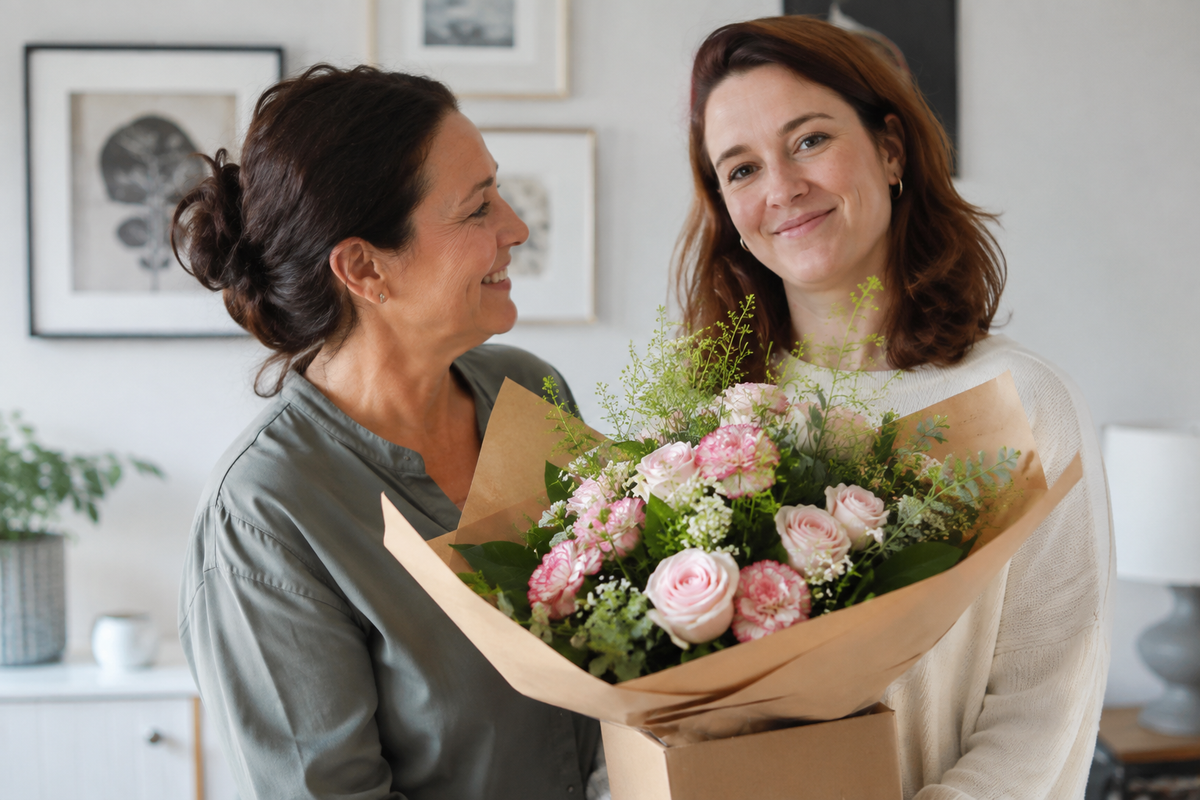
Tonal palettes and rounded, many-petalled forms can create a softer impression. Roses, ranunculus, carnations or tulips are possible examples, not fixed birthday rules. Pale pink, apricot, cream or muted berry shades can sit close together, keeping the transitions gentle.
Repeating a colour or a similar flower shape in several places gives the eye a clear path through the bouquet. That can make the whole arrangement feel calmer. A darker accent can add depth without disturbing the quiet overall mood.
Loose and natural
Smaller flowers, branching stems, foliage, grasses or individual lines extending beyond the compact shape can create a more open silhouette. These elements introduce movement and leave breathing space between the blooms. The exact choice of flowers can follow what is available at the time.
This direction works well for someone who likes informal, garden-inspired or slightly imperfect shapes. Natural does not mean random: repeated colours and one or two clear focal flowers can hold even a loose bouquet together.
The relationship sets the tone, not the type of flower
For a partner, a bouquet can be openly romantic – but it does not have to be. When that is the kind of closeness you want to convey, colour and shape can make it clear. A colour you both love, a familiar type of flower or a completely unromantic, cheerful mix can be just as personal.
With family and friends, shared memories or known preferences often matter more than traditional symbolism. For a colleague or a new acquaintance, a friendly palette with a clear direction may feel appropriate without carrying a particularly intimate meaning. These are nuances of the gesture, not rigid rules of etiquette.
Colour, shape and size work together
Colour is usually what catches the eye first, but shape helps determine how it reads. Strong yellow in large, open blooms can look more graphic than the same hue dotted through many smaller flowers. Powder pink in rounded, closely packed forms can feel more compact; add fine branches and breathing room and it becomes lighter.
Size alone does not make a birthday bouquet more personal, either. One large focal flower can provide an anchor, while repeating several smaller flowers can create rhythm. A compact bouquet can feel every bit as considered as a more expansive arrangement. Flowers do not check anyone's ID, after all – age and gender are not design categories.
Which flowers work when you know little about the person?
When you know very little about them, a few concrete decisions will help more than a long list of flowers:
- Is there a known preference or dislike? A colour, a flower or a style is enough to get started.
- Should the bouquet feel lively or calm? That choice narrows the range of colour intensity and contrast.
- Would a compact or loose shape suit them better? A rounded, closed silhouette feels different from one that is airy, branching and full of movement.
- How clearly defined should the gesture be? A single colour family feels deliberate; a balanced mix keeps it more open and easy-going.
If even those clues are missing, a harmonious mixed arrangement with a clear colour direction is a sensible choice. It does not need to carry a secret message. What makes it personal is that you have chosen a recognisable mood.
What a personal birthday bouquet does not need
It does not need to be divided into “for women” and “for men”, assigned a compulsory colour for a particular age, or checked against a star sign. These shortcuts may be convenient, but they say little about what any one person finds beautiful. What you know they like matters more than an invented demographic.
Nor does it need to feature a flower you can guarantee is their favourite. If the variety you wanted is not available, colour, form and mood can still guide the choice: rounded rather than graphic, tonal rather than high-contrast, calm rather than lively. The idea stays personal even when the ingredients change.
Four details are enough to make a good choice
Sum up what you want in a single sentence: their favourite colour or palette, the mood, a compact or loose shape, and how intimate the gesture should be. For example: “warm and bright, on the loose side, heartfelt but not romantic”. That is more precise than a random list of flower varieties.
If you would like to keep browsing, the birthday flowers page is a natural next step. Use it for visual guidance, then return to the person: what would feel as though it had clearly been chosen for them?